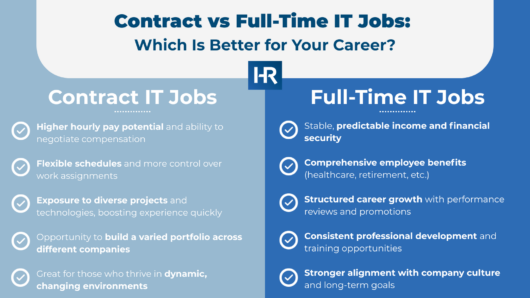






Contract vs Full-Time IT Jobs: Which Is Better for Your Career?

A project manager once faced an unexpected challenge when a key contractor left mid-project, leaving behind a trail of delayed deadlines and budget overruns. That scenario prompts a crucial question: Is it better to embrace the flexibility of contract roles or commit to full-time IT positions for career stability and growth? Understanding the trade-offs can help professionals decide which path is best suited to their life and career goals. Consider insights from pivotal research, such as the workforce trends study that outlines the booming earnings in the freelance market.
By delving into the nuances of both contract and full-time roles, industry professionals can navigate hungrily competitive markets. This article explains where each path excels, focusing on long-term benefits, immediate perks, and personal career aspirations.
The Historical Struggle Between Contract vs Full-Time IT Jobs
The debate between contract and full-time IT positions has evolved over the years. The IT industry has long witnessed a tug-of-war where the balance of freedom and financial stability often hangs in the balance. In 2024, freelancers in the U.S. generated $1.5 trillion in earnings, a statistic that illustrates the growing trend towards independent contracting (Upwork Research Institute).
Historically, full-time roles provided secure income and predictable benefits that contractors could not match. However, shifting economic cycles and the rise of remote work have changed the dynamic. Independent IT professionals now enjoy higher hourly rates on contract roles while embracing flexible schedules that suit modern lifestyles. This evolving landscape redefines career planning in IT, offering multiple paths to professional fulfillment.
Contract roles and permanent positions each faced different hurdles in adapting to a changing economy. Market shifts and technological advances have played critical roles in altering employment practices, with advances in automation reshaping the recruitment process in IT staffing (ZipDo Education).
How to Know When a Contract IT Role Benefits Your Career
Contract roles often come with higher hourly rates, which can be particularly attractive for IT professionals seeking quick capital gains. Short-term projects can provide significant boosts in income, especially when a specific set of high-demand skills is required. The nature of these assignments allows specialists to negotiate terms that best suit project requirements while capitalizing on emerging technological trends.
Before choosing a contract role, evaluate your personal career goals. Freelancers and contract IT professionals who excel in environments of rapid change and diverse project demands typically thrive in this setting. The ability to set your own schedule and diversify your portfolio are compelling benefits of contract roles, particularly when market demand surges. For instance, 67% of independent contractors using on-demand labor platforms possess over a decade of on-site IT experience, indicating a strong preference for and success in contract work (Field Nation).
Also consider your appetite for risk. If you enjoy a dynamic work environment that offers a variety of challenges and experiences, contract roles can serve as catalysts for developing current skills while learning new ones on the fly. Flexibility, combined with opportunities to tackle distinct IT challenges, marks contract roles as an ideal choice for those who value autonomy and diversity in work assignments.
How to Know When a Full-Time or Direct Hire IT Role is Better For Your Career
Full-time IT roles offer more than just a consistent paycheck. They provide a stable foundation for building technical expertise within a company’s specific ecosystem. Dedicated benefits such as health insurance, retirement plans, training programs, and career development opportunities are typical perks that appeal to professionals seeking long-term job security.
Consider a full-time role if you prefer stability over the fluctuations inherent in contract work. Many seasoned IT professionals gravitate toward these positions because the long-term relationships they build often lead to deeper expertise and career advancement. Salaries in full-time roles can be competitive, and the associated benefits ultimately contribute to a higher overall compensation package. Such roles provide a safety net during market downturns, making them particularly appealing during unpredictable economic times. This stability is highly valued, especially as 65% of IT firms report cost savings due to remote work arrangements, which have become a fixture in full-time roles (Gitnux).
Working full-time in a structured environment may also provide a more consistent career path and opportunities for mentorship. This is essential for those who value professional growth, where regular evaluations and promotions are part of a clearly defined career ladder. If your goal is to develop deeply specialized technical skills and contribute to long-term projects, full-time employment may be the most advantageous route.
Pros and Cons of IT Contract Roles
IT contract roles shine when it comes to financial incentives and diverse project experience. One of the most significant advantages is the ability to command higher hourly rates. Contract positions let professionals negotiate compensation that often reflects the immediate value they bring to a project. This flexibility is particularly appealing for those who have honed niche skills over the years.
However, alongside the benefits come certain drawbacks. Contract roles frequently lack the comprehensive support structures that full-time roles offer. Access to employee benefits such as paid leave, health coverage, and training budgets are often limited. Additionally, contract roles can entail periods of unpredictability with intermittent projects rather than a sustained income stream. Nevertheless, cost advantages are evident in contract models, as companies often save 20-30% on compensation expenses compared to full-time technicians, considering benefits, training, and downtime (Field Service Industry Statistics).
The opportunity to work on varied projects instead of the routine nature of a single employer also catalyzes skill expansion. Contractors engage in different environments, adapting swiftly to challenges which, in turn, enrich their resumes. While this variety accelerates learning, the trade-off often comes in the form of reduced job security and the absence of dedicated career advancement mechanisms.
Why the Company You Take a Contract Role With Matters
The reputation and structure of the company offering a contract role can make or break the professional experience. Some firms invest substantially in training and development for their temporary staff, ensuring that contractors remain at the forefront of technology advancements. A well-established company can provide the kind of robust support and networking opportunities that mitigate the typical risks associated with contract work.
When evaluating potential contract opportunities, consider how well the company integrates contractors into its teams. The collaboration between permanent and temporary staff can influence both career progression and day-to-day job satisfaction. A company known for its balanced approach may provide contract workers with pathways to permanent roles if their skills align with future business needs. Large tech conglomerates often exhibit such practices, offering resources and streamlined onboarding processes that add significant value to why a contractor might choose one role over another.
The choice of employer is equally essential in ensuring a smooth contract experience. Companies that actively support upskilling and prioritize inclusive work cultures tend to foster environments where contractors feel recognized and integrated. Choosing a reputable company not only enhances professional credibility but also sets the stage for future career opportunities, ensuring that even short-term roles contribute meaningfully to long-term career development. Evaluating previous reviews and industry ratings can also be a wise move before signing on.
Pros and Cons of Full-Time IT Roles
Full-time IT roles bring a robust network of benefits that extend well beyond a steady salary. Employees enjoy structured career paths with established performance metrics and regular evaluations that guide professional growth. This structured environment often leads to access to internal training sessions, mentorship, and comprehensive benefits such as health insurance and retirement funds.
On the downside, full-time positions can sometimes come with bureaucratic hurdles that slow down decision-making and limit creative freedom. The uniformity of a large company can stifle the dynamic nature that many IT professionals thrive on. Additionally, while the steady salary is comforting, it may not match the hourly earnings potential of contracting, particularly for those with specialized skills. Yet, the comprehensive benefits package and career stability offer a kind of security that a fluctuating freelance market cannot-especially during economic uncertainties.
Notably, companies that have embraced remote and hybrid work models have shown significant success in maintaining reduced costs and enhanced employee satisfaction. For instance, a recent survey found that 72% of IT companies worldwide have adopted hybrid work approaches, reflecting a broader trend towards flexibility in full-time employment (WiFi Talents). This shift in workplace dynamics plays a crucial role in retaining talent by balancing flexibility with stability, a balance that could be central to many professionals’ long-term career strategies.
Another crucial factor is the opportunity for professional development that full-time roles typically offer. Companies often sponsor certifications, host technical workshops, and encourage inter-departmental collaborations. Such initiatives contribute meaningfully to boosting an employee’s skill set over time, ultimately leading to higher productivity and job satisfaction. Despite the clear advantages, the trade-off remains in reduced earning potential per hour compared to contract roles, which is a point of contention for some in the fast-paced IT industry.
As the career landscape continues to evolve, it becomes clear that both contract and full-time roles have their unique place in the IT world. The decision between the two should be based on individual career goals, financial needs, and lifestyle preferences. For professionals who thrive on varied project challenges and immediate financial rewards, contracting presents a compelling prospect. Conversely, those seeking stability, structured growth, and comprehensive benefits may find full-time roles more rewarding.
Ultimately, career paths are rarely one-size-fits-all, and a hybrid approach may even be advantageous over certain periods of one’s career. Whether leaning toward contracting or securing a direct hire IT role, understanding the factors that drive job satisfaction and performance is the first step toward making an informed decision. Given that every professional’s circumstance is unique, regularly re-evaluating career goals in light of evolving industry trends is not only prudent but necessary.
Recent industry observations have indicated that while 80% of IT staffing firms report difficulty in filling cybersecurity roles (ZipDo Education), significant opportunities exist in both contract and full-time roles that address this skill gap. The success of IT careers depends on continuous learning and informed choices that align with the ever-changing demands of technology.
In today’s competitive IT landscape, where 80% of staffing firms struggle to fill specialized roles like cybersecurity, efficiency in hiring is not just a goal—it’s a necessity. Hunter Recruiting stands as your strategic partner, delivering measurable ROI through faster hiring, superior talent quality, and enhanced retention. Our industry-specialized recruiters, with real technical backgrounds, understand the unique challenges you face. We offer scalable recruiting models tailored to your needs—whether contract, direct hire, or executive search. With a proven record of filling even the most challenging technical and professional positions swiftly, we ensure that your hiring process is not just a transaction, but a strategic advantage. Request a Staffing Consultation today and experience the difference of a partnership built on expertise, precision, and long-term commitment.
A Word From Our Expert
Georgianna Rhoda, Hunter Recruiting’s IT recruiting expert, offers this perspective:
“Neither contract nor full-time IT roles are inherently better—the right choice depends on where a professional is in their career and what they are optimizing for. Contract roles offer speed, flexibility, and exposure to high-impact projects, while full-time positions provide stability, long-term skill development, and organizational influence. The most successful IT professionals are intentional, aligning their employment model with their financial goals, risk tolerance, and desire for growth at that point in time.”