





How Agencies Handle Urgent Staffing Needs in Manufacturing

While every industry experiences time-sensitive hiring pressure, urgent staffing needs in manufacturing carry especially high stakes.
Every hour of downtime in manufacturing can cost the company hundreds of thousands of dollars, and some critical operations cannot stop at all. At the same time, safety is non-negotiable, requiring trained staff in place.
When manufacturers have urgent staffing needs, they often have to make a quick decision whether to begin a talent search internally or outsource it to a recruiting agency. Many hiring managers know how challenging it is to run a thorough hiring process under the pressure of a workforce shortage. But trusting an outside partner with roles that directly affect production, safety and performance is a significant decision.
So, how do agencies handle urgent staffing needs in manufacturing without sacrificing quality for speed? Here’s what employers should know.
How Recruiting Agencies Fill Critical Roles in Manufacturing
How agencies handle urgent staffing needs in manufacturing depends on what is creating the critical workforce shortage. An experienced manufacturing staffing agency can assess the immediate need, help determine which positions should actually be filled, tap existing manufacturing talent networks, and recommend temporary, contract, or permanent staffing solutions that protect operations without sacrificing quality of hire or requiring tons of internal bandwidth.
1. Assess the Immediate Workforce Gap
Urgent manufacturing staffing starts with determining what work needs to get done. Not every position should be filled exactly the way it was previously staffed. There might be a better way to attract talent using a different job description; the role might have evolved; or different skill sets could offer a better way of doing things.
A recruiting agency will also help evaluate the full staffing picture. A manufacturer that needs 15 additional production workers for a new shift has a fundamentally different problem than a facility that unexpectedly loses its only controls engineer. The first may require rapid access to qualified workers at scale; the second requires a targeted search for specialized expertise.
Workforce consulting can also help determine whether any existing employees can be fast-tracked for promotion, whether responsibilities can be redistributed, which positions require permanent employees, and where temporary support could create breathing room.
Before diving into a search, both the agency and manufacturer should understand where the organization is losing capacity, what responsibilities need immediate coverage, and which skills are truly required. That includes reviewing shift requirements, certifications, compensation, location, experience, and desired start date. Employers should also distinguish between qualifications that are essential on day one and skills that can reasonably be taught.
The approach is particularly important as manufacturers adopt new technologies. Deloitte notes that manufacturers face both a skills gap and an applicant gap, while evolving operations increasingly require combinations of traditional manufacturing, digital and soft skills. Filling yesterday’s job description may not solve tomorrow’s workforce need.
2. Tap Existing Manufacturing Talent Networks
Once the need is clearly defined, a specialized staffing agency can begin with a network of people who already have relevant manufacturing experience instead of building a candidate pool entirely from scratch.
That network can include previous applicants, candidates recruiters have interviewed, former placements, referrals, passive candidates, and professionals recruiters have developed relationships with over time. For high-volume needs, an established network can create immediate access to a larger group of potential workers. For specialized positions, it gives recruiters a starting point for identifying people with the exact technical background required.
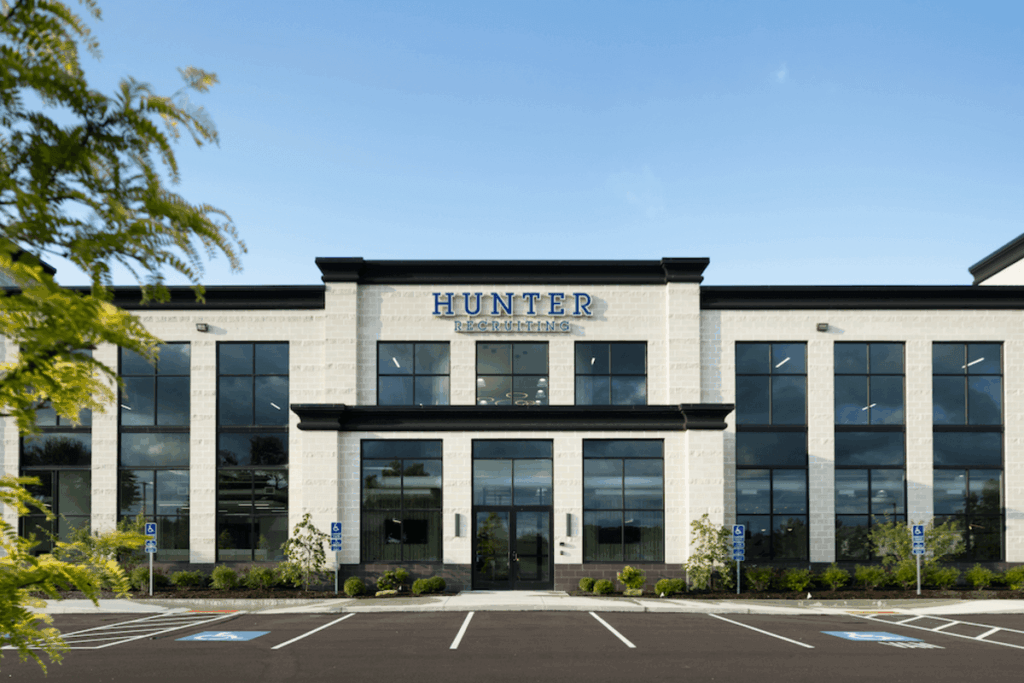
Hunter Recruiting, for example, maintains an applicant pool of 1.2 million people and has completed more than 15,000 placements. Among its manufacturing placements, 92% have five or more years of specialized industry experience, and 93% remain with their employers for at least three years.
Those quality metrics are important because urgent staffing should not require an employer to choose between speed and fit. A deep candidate network is valuable precisely because it can make it easier to find qualified people quickly without simply lowering hiring standards.
3. Recruit Beyond Active Job Seekers
Job postings are useful for reaching people who are actively looking for work, but they represent only one recruiting channel. For difficult manufacturing positions, the right person may already be employed and have little reason to browse job boards.
Manufacturing recruiters can use direct sourcing to identify professionals whose experience aligns with a specific opportunity. That strategy becomes increasingly important for roles such as manufacturing and controls engineers, skilled maintenance professionals, CNC talent, quality leaders, plant managers, and other specialized positions.
This is where industry specialization matters in recruitment. A recruiter who routinely hires manufacturing engineers or maintenance technicians develops different candidate relationships and technical familiarity than a generalist recruiter filling unrelated roles across many industries. That knowledge can help the recruiter understand what experience transfers, ask better screening questions, and recognize great resumes.
Hunter saw that disconnect firsthand with a global manufacturing client whose existing staffing suppliers struggled to understand technical requirements and regularly submitted underqualified candidates. Hunter ultimately supported the organization across more than 70 U.S. work sites and has placed more than 1,300 plant managers, engineers, operations professionals and other workers during a partnership spanning more than 15 years.
4. Use Flexible Staffing to Create Immediate Capacity
Not every urgent need requires an immediate permanent hire. Temporary and contract staffing can give manufacturers additional capacity while they determine the best long-term solution.
Temporary workers may help cover unexpected absences, production increases, seasonal demand, new shifts, or project-based work. Contract professionals can provide specialized expertise for a defined initiative or period. In other cases, temporary employees can relieve pressure elsewhere in the operation while a company conducts a more deliberate search for a difficult permanent hire.
This is resourceful when the alternative is asking the existing workforce to absorb the shortage indefinitely. Additional capacity can reduce dependence on overtime, protect productivity, and give managers more time to evaluate permanent hiring decisions.
The important distinction is that temporary staffing should support the workforce strategy rather than substitute for one. If a manufacturer repeatedly uses temporary labor to address the same underlying shortage, it may be time to examine the job, compensation, scheduling, or permanent workforce structure more closely.
5. Streamline Screening, Interviews and Onboarding
An urgent search can lose momentum even after qualified candidates are identified. Multiple interview rounds, slow feedback, unclear decision-making, and lengthy approvals can cause strong candidates to accept other opportunities before an employer makes an offer.
A staffing agency can help coordinate the process from initial sourcing through screening, interviews, offers, and onboarding. Employers can support that effort by identifying decision-makers in advance, reserving interview availability and agreeing on what constitutes an acceptable candidate before recruiting begins.
Speed should come from eliminating unnecessary friction rather than eliminating meaningful evaluation. The goal is to make a good hire quickly enough to address the operational need without creating another vacancy months later.
What Are the Best Staffing Solutions for Manufacturing Roles?
The best staffing solutions for manufacturing roles prioritize finding the right fit for the role. Be wary of staffing solutions promising the fastest placement or lowest recruiting cost. A rushed placement or mishire can create turnover, require the hiring process to start over, and disrupt the employees responsible for training and covering the position.
The financial consequences can be substantial. In a survey of more than 300 HR leaders at U.S. manufacturing companies, 60% estimated that replacing a skilled frontline worker costs between $10,000 and $40,000, while 56% said turnover has a moderate to severe impact on their organization’s bottom line.
Choose a Staffing Partner With Manufacturing and Local Market Expertise
A staffing agency should understand the work behind the job title. Manufacturing encompasses environments ranging from automotive and industrial production to pharmaceutical, food and beverage, aerospace and other highly regulated or technically specialized operations. A maintenance technician in one plant may need a very different background from someone with the same title working in another.
Recruiters who regularly hire within a manufacturer’s industry can build deeper networks and develop a better understanding of the responsibilities. That expertise helps recruiters determine which candidates actually have transferable experience instead of relying primarily on keyword matches.
Local knowledge matters as well. Compensation, commuting patterns, shift preferences and competition for particular skills vary by market. A staffing partner familiar with the area can provide guidance on an employer’s pay, requirements or hiring process so the role is positioned competitively.
Treat Your Staffing Agency as a Workforce Partner, Not a Vendor
The strongest staffing relationships become more valuable over time because recruiters develop institutional knowledge about the organization. They learn which technical skills matter, what successful employees have in common, how the operation works, and what candidates are likely to thrive within the company’s culture, which can improve both candidate quality and recruiting efficiency.
A long-term relationship also makes it possible to build talent pipelines before positions become emergencies. Instead of starting with an empty candidate pool every time there is an urgent hiring need, recruiters can maintain relationships with professionals who have relevant skills and may be receptive when the right opportunity becomes available.
The partnership also affects employer reputation. Recruiters often provide a candidate’s first meaningful interaction with an employer, so communication, transparency, and professionalism matter even when the person is not ultimately hired. An urgent staffing need should not become an excuse for a rushed or impersonal candidate experience. Ultimately, the best manufacturing staffing solution should make the next hiring need easier to solve.
The scale of the industry’s long-term workforce challenge makes that talent pipeline planning increasingly important. Of the estimated 3.8 million manufacturing positions that may need to be filled between 2024 and 2033, approximately 2.8 million are expected to result from retirements rather than industry growth. Manufacturers therefore need to think beyond today’s vacancies and consider where knowledge and skills could leave the organization over the next several years.
That pipeline can include external candidates, but it should also account for the people already inside the organization. Training and development can expand the pool of employees capable of stepping into harder-to-fill positions. 47% of respondents in Deloitte and The Manufacturing Institute’s research identified flexible work arrangements as particularly impactful for retention, and employees who believe they can acquire skills important to their future are significantly less likely to leave.
Build a Manufacturing Staffing Strategy Before the Next Urgent Need
Contact a manufacturing recruiter to learn more about how we handle urgent staffing needs at manufacturing facilities like yours. Or, explore our manufacturing staffing solutions